Gapi Africa Safaris

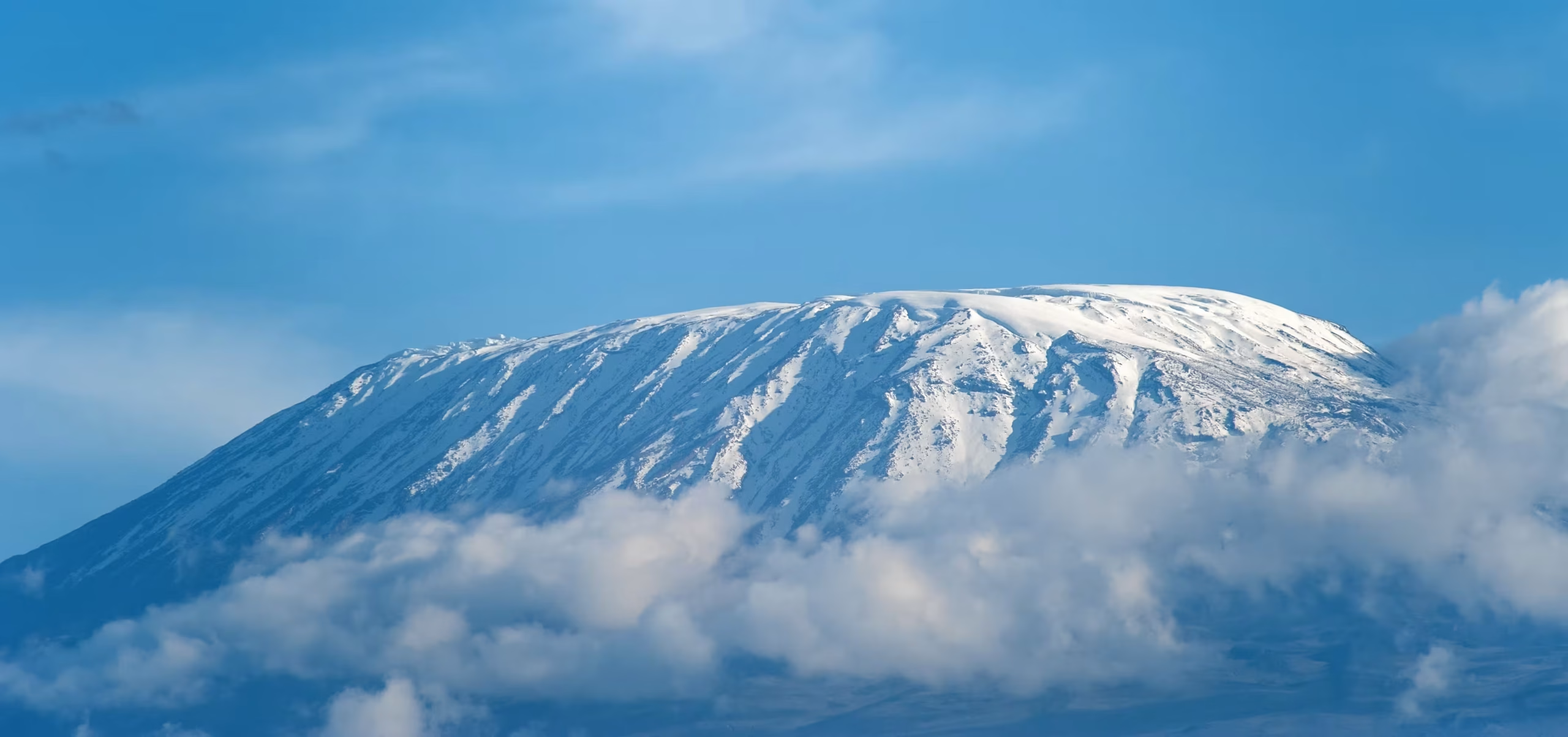
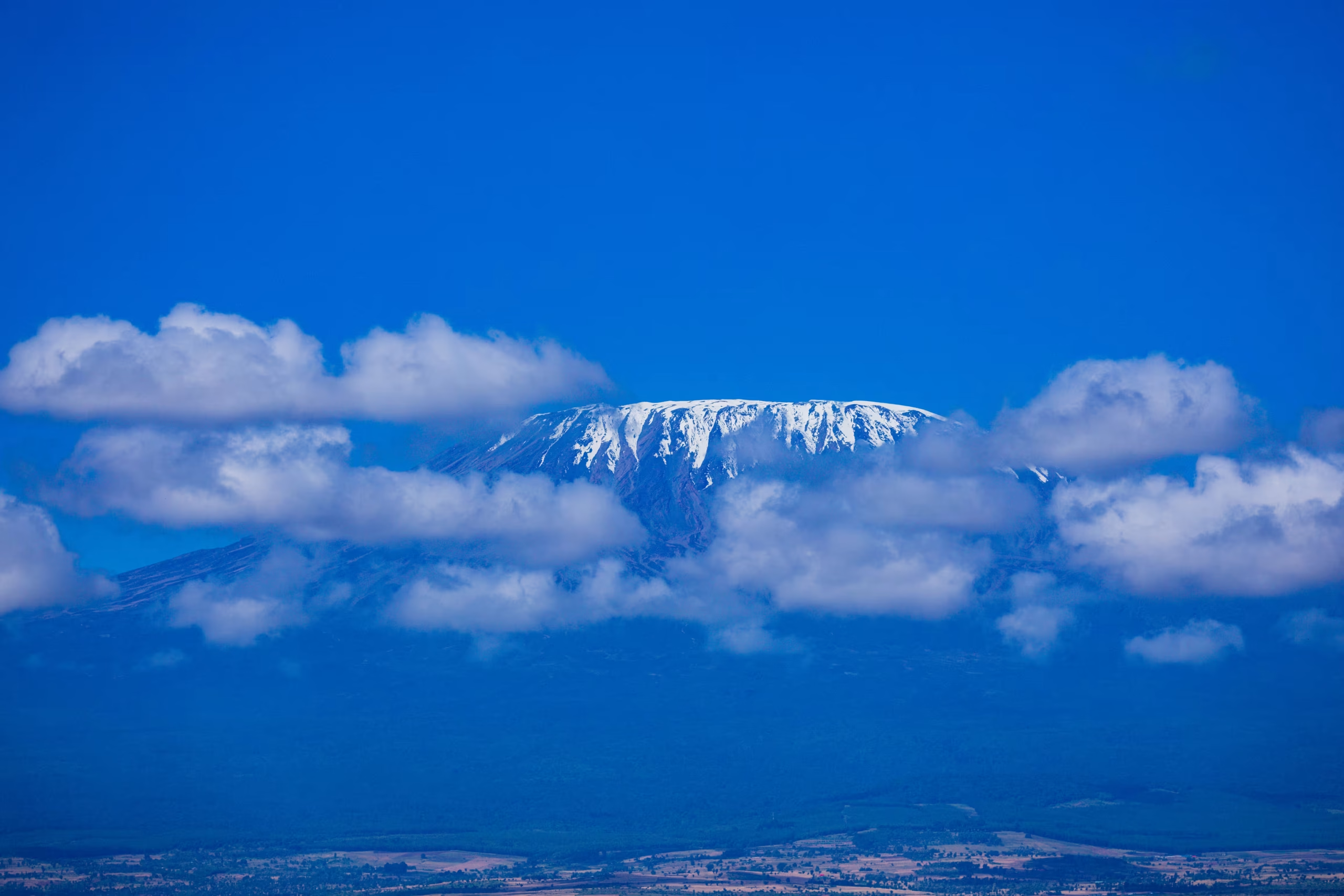
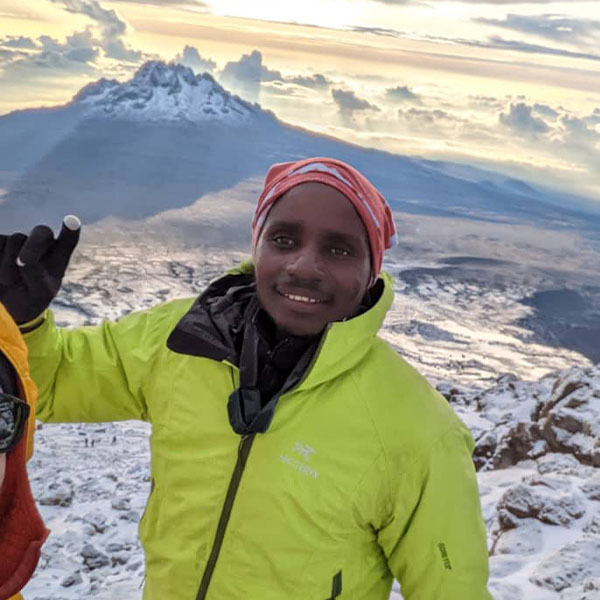
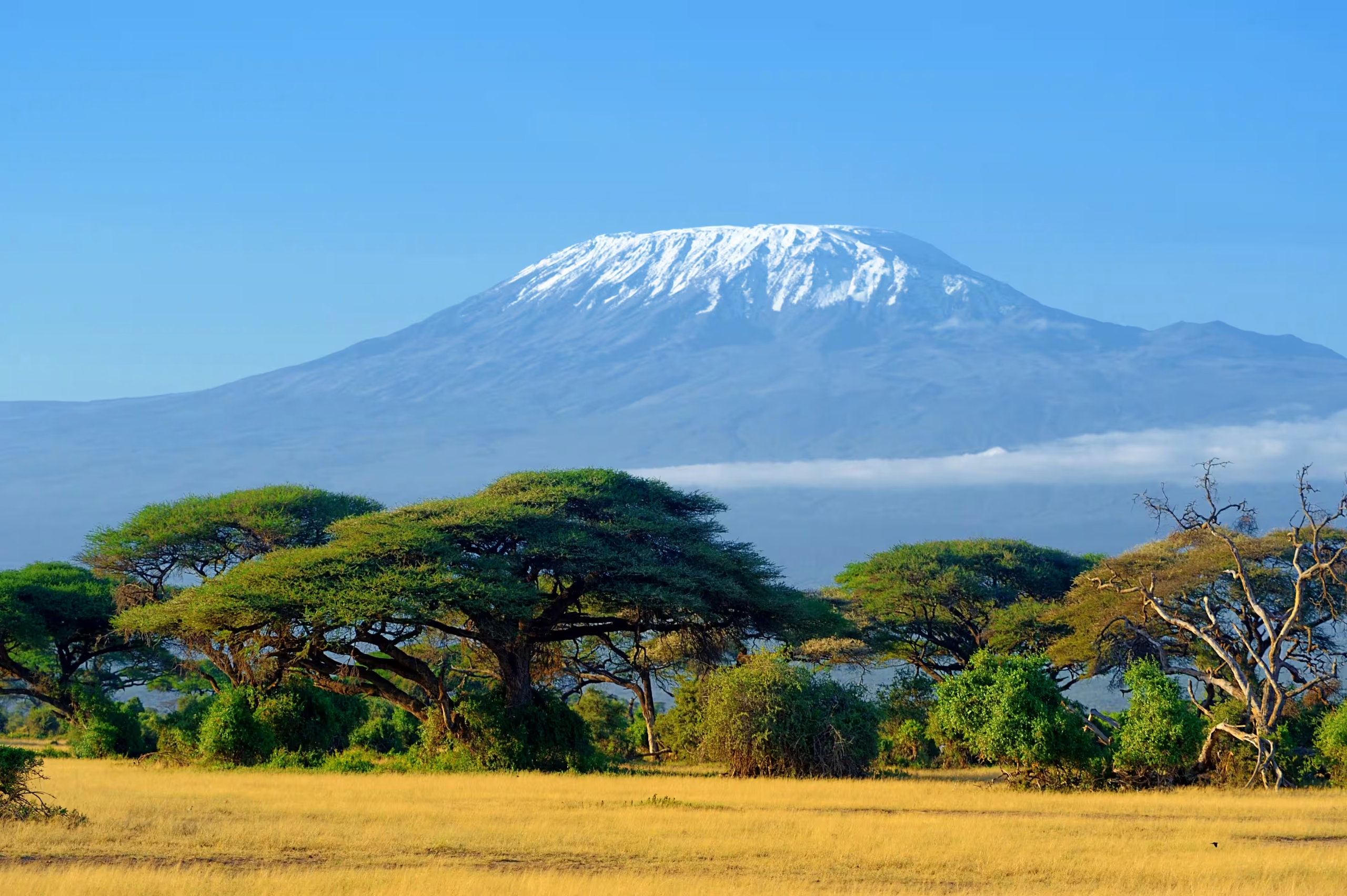
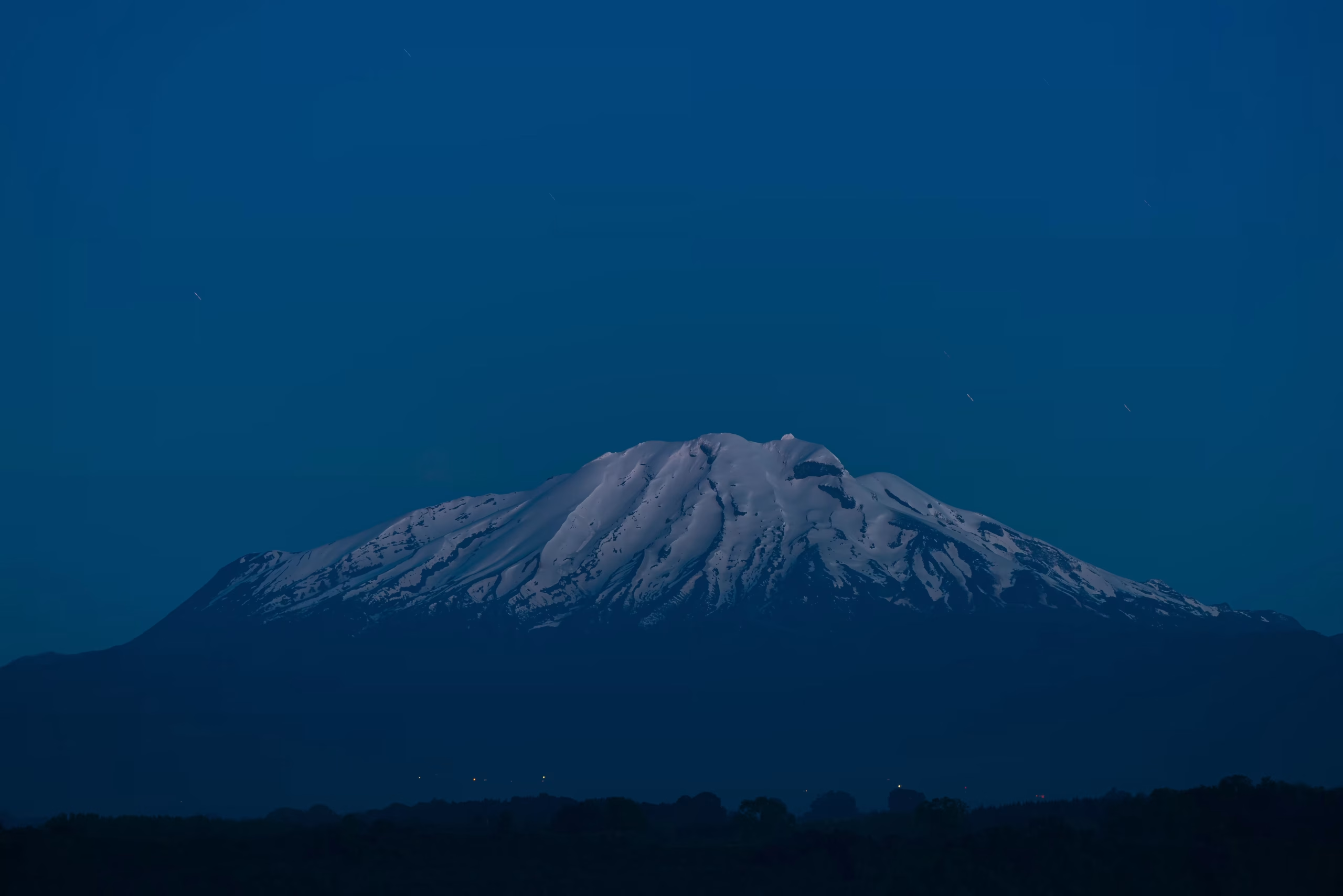
Mount Kilimanjaro summit
6
Summit Routes
91%
GAPI Summit Rate
5–9
Days on Mountain
Africa’s Roof · Tanzania · 5,895m

KilimanjaroAwaits You.

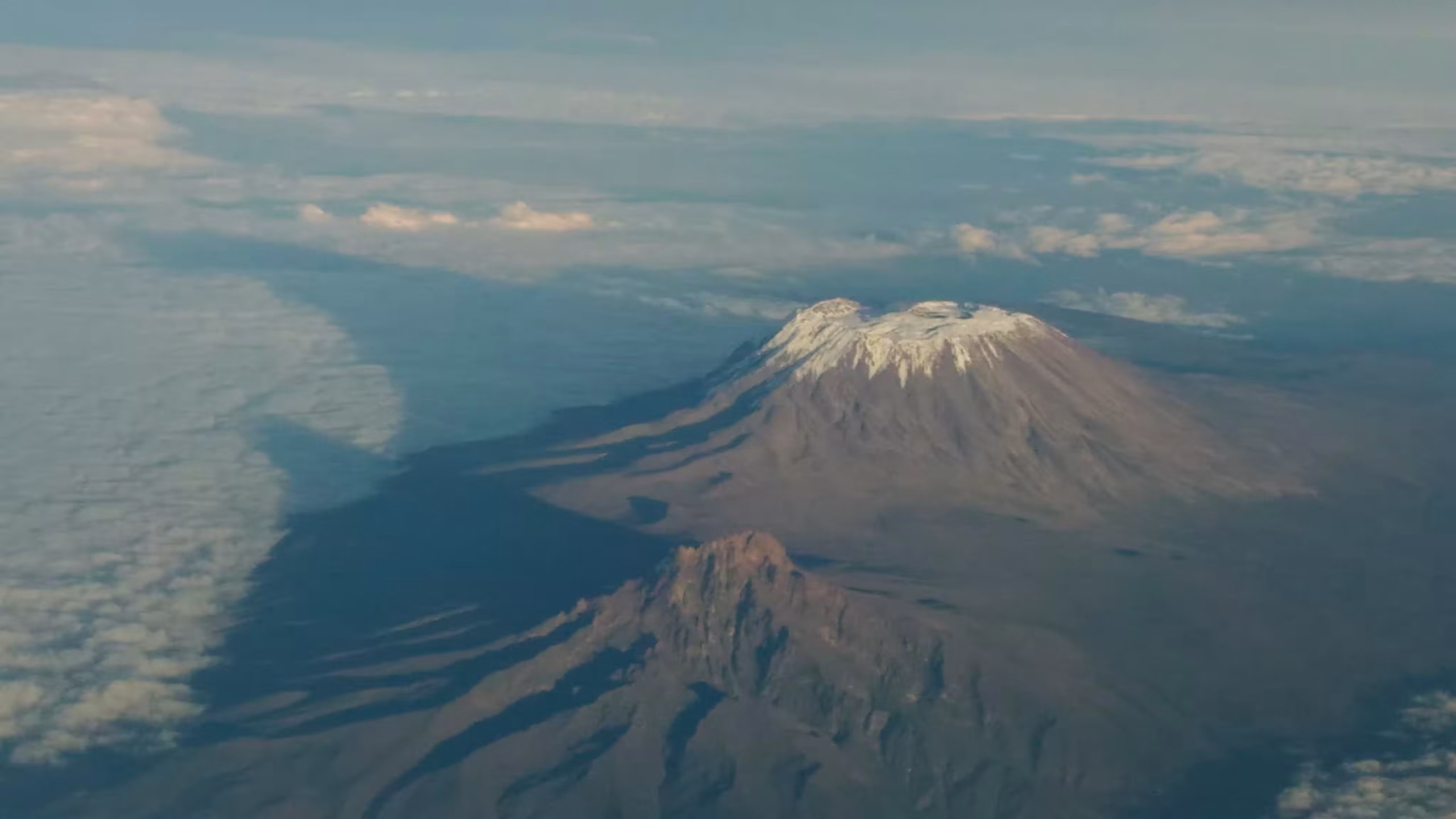
Africa’s highest peak at 5,895m. No technical climbing — only determination, expert private guides, and the summit of a lifetime.

6
Summit Routes
From the scenic Lemosho to the remote Northern Circuit — every ambition and experience level served.
91%
GAPI Summit Rate
Our guides have lived with this mountain for years. The highest per-route success rate we know of.
5
Ecological Zones
Rainforest to arctic in a single ascent. No mountain on Earth offers this range of terrain.
0
Technical Skills Needed
No ropes, no crampons (on most routes), no climbing experience. Endurance and the right pace win.
All Routes

Six paths to
Uhuru Peak.

Each route has its own character — scenery, crowds, acclimatisation, and difficulty all vary. We advise based on your fitness, experience level, and what you want from the mountain.

Marangu Route — Kilimanjaro
Hut Accommodation
02
Marangu
“The Coca-Cola Route”

The only route with permanent hut accommodation — a warmer, more comfortable ascent. Shorter duration means less acclimatisation time, which affects success rates, but the infrastructure and steady trail make it accessible for first-timers.

Duration
5–6 Days
Difficulty
Moderate
Accommodation
Permanent Huts
Success Rate
Medium
Best For
Beginners or those who prefer beds over tents
Lemosho Route — Kilimanjaro
Premium Route
03
Lemosho
“The Scenic Path”

Starts from the west, approaching through pristine forest with low crowds and exceptional biodiversity. The longer duration creates ideal acclimatisation conditions. Widely regarded as the most beautiful route on the mountain.

Duration
7–8 Days
Difficulty
Moderate
Accommodation
Camping
Success Rate
Very High
Best For
Luxury and experience-focused climbers
Rongai Route — Kilimanjaro
Northern Approach
04
Rongai
“The Northern Approach”

Approaches from Kenya’s border — drier, quieter, and more gradual. The landscape is different from the southern routes: open moorland and distant Kenyan plains. A superior option during the wet seasons when southern routes suffer.

Duration
6–7 Days
Difficulty
Moderate
Accommodation
Camping
Crowd Level
Low
Best For
Solitude seekers and those climbing in rainy season
Northern Circuit — Kilimanjaro
Highest Success Rate
05
Northern Circuit
“The Full Circumnavigation”

The longest route — and the one with the highest summit success rate. Circles the mountain for a near 360° perspective before ascending. The extra days of acclimatisation make a real, measurable difference at summit altitude.

Duration
8–9 Days
Difficulty
Moderate
Accommodation
Camping
Success Rate
Very High
Best For
Maximum success probability and minimal crowds
Umbwe Route — Kilimanjaro
Most Challenging
06
Umbwe
“The Direct Ascent”

The steepest and most direct line to the summit. Rapid altitude gain makes acclimatisation difficult, and the physical demands are significant. Not recommended for first-time Kilimanjaro climbers — but a formidable challenge for those who know what they’re doing.

Duration
5–6 Days
Difficulty
Challenging
Accommodation
Camping
Success Rate
Lower
Best For
Experienced trekkers who want a real physical test
Route Comparison

At a glance —
which route fits you?

Route Days Difficulty Success Rate Crowd Level Accommodation
Marangu5–6Moderate Medium High Huts
Lemosho7–8Moderate Very High Medium Camping
Rongai6–7Moderate High Low Camping
Northern Circuit8–9Moderate Very High Very Low Camping
Umbwe5–6Hard Lower Very Low Camping
What You Experience

Five worlds in
one ascent.

Zone 01
800–1,800m
Cultivation Zone
Terraced farms, coffee plantations, Chagga villages. The mountain as it has been lived in for generations.
Coffee & BananaChagga Communities
Zone 02
1,800–2,800m
Rainforest
Dense jungle canopy. Colobus monkeys overhead. Birdsong replacing all other sound. Cool, damp, and extraordinary.
Colobus Monkeys500+ Bird Species
Zone 03
2,800–4,000m
Heath & Moorland
Giant lobelias and heathers emerge from the mist. Open views begin. The mountain shows its true scale for the first time.
Giant LobeliasOpen Vistas
Zone 04
4,000–5,000m
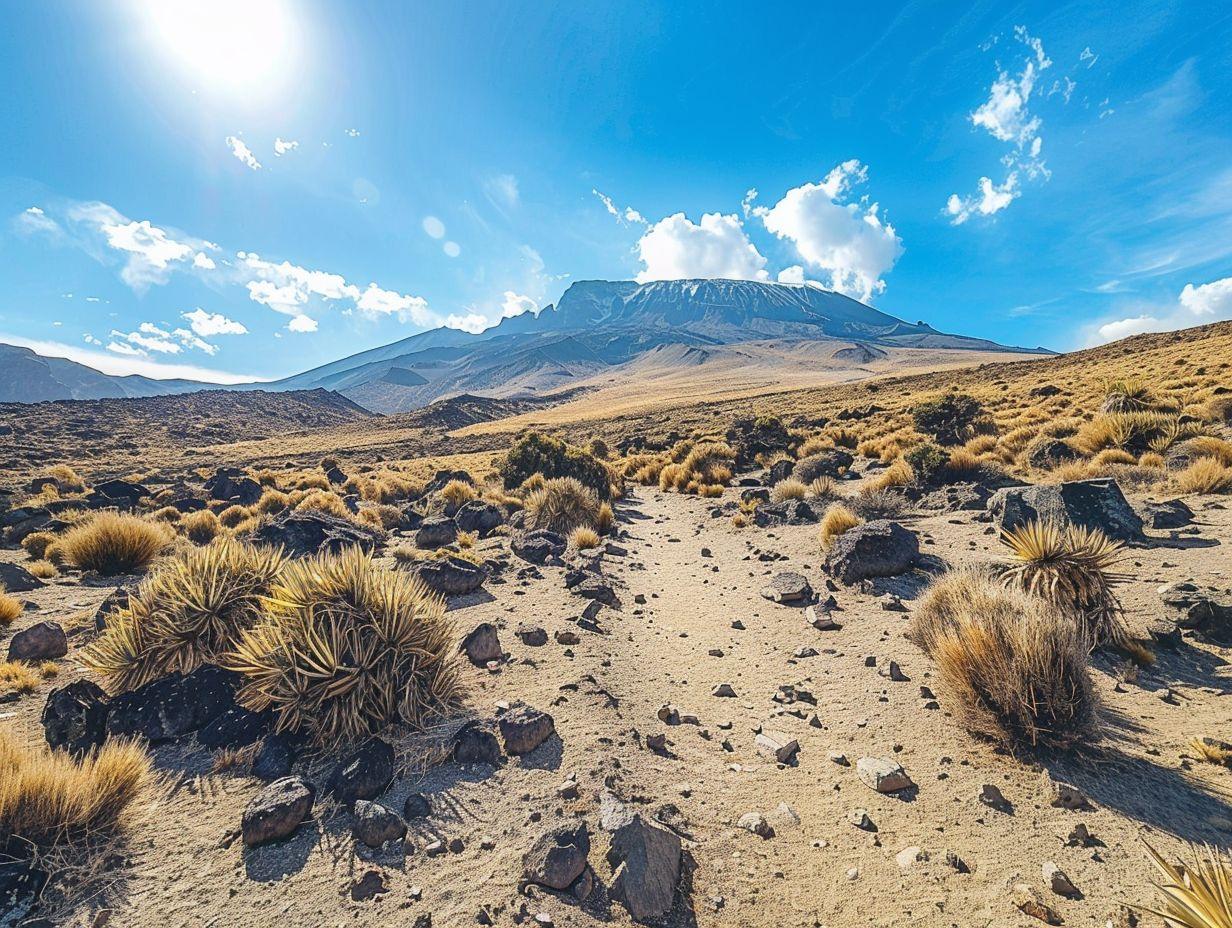
Alpine Desert
Stark. Silent. The air noticeably thinner. Rocky terrain and extreme UV. Sparse life, extraordinary beauty.
Volcanic RockHarsh Conditions
Zone 05
5,000–5,895m
Arctic Summit
Ice fields, glaciers, and the summit crater. Uhuru Peak. Nothing prepares you for the view.
Glaciers & IceUhuru Peak
Best Time to Climb

When to go
matters.

Primary Season · Best Conditions
June – October
Dry season. Clear skies, firm trails, excellent summit visibility. The most popular window — book well ahead.
Secondary Season · Also Good
January – March
Quieter, cooler, occasional snow above 4,000m. Fewer climbers and a different character to the mountain.
Avoid If Possible
April – May & November
Main rainy seasons. Trails slippery, views obscured. Lower summit rates — we don’t recommend these windows.
Essential Advice

What makes
the difference.

01
Choose a longer route
Extra acclimatisation days make a measurable, proven difference to summit success. Don’t optimise for speed.
02
Walk slowly — “pole pole”
The Swahili phrase that defines Kilimanjaro climbing. The summit is not won by pace — it’s won by patience.
03
Layer for every climate
You’ll pass through tropics and arctic conditions in a single day. Your gear system needs to handle both.
04
Trust your guide
GAPI guides have ascended hundreds of times. When they slow the pace or recommend turning back, they are right.
Loading itinerary…
Saved Trips