



Most people booking their first safari have never done anything quite like it before, there is no everyday equivalent to compare it to. Questions about how the process actually works, from that first inquiry email to the drive back to the airport, come up constantly. This guide walks through the whole thing in order, so you know exactly what to expect at every stage, not just the highlights.
Step 01 You Send an Inquiry
It starts with an email, a WhatsApp message, or a form on our site, whichever is easiest for you. The more you can tell us upfront, roughly when you want to travel, how many people, and what matters most (wildlife density, comfort level, budget range) the faster we can put together something worth looking at rather than a generic template.
We typically reply within 24 hours with follow-up questions if needed, or a first draft itinerary if you have already given us enough to work with. There is no cost or commitment at this stage, it is simply a conversation about what you are looking for.

Step 02 We Build a Custom Itinerary
Nothing is pulled from a fixed package. We build the route, camps, and pacing around your specific dates, priorities, and budget, drawing on properties our team has actually visited. You will get a day-by-day breakdown with accommodation options, indicative pricing, and the reasoning behind each choice, not just a list of names.
This is the stage for back-and-forth. Want a different camp, an extra day in the Serengeti, or Zanzibar added on the end? We revise until it fits, usually within two or three rounds of edits before everyone is happy with the plan.

Step 03 You Confirm & Pay a Deposit
Once the itinerary looks right, we lock in your camps and vehicle with a deposit, which secures your dates and prevents another traveller from booking the same rooms during peak season. The remaining balance is typically due closer to departure, with the exact terms laid out clearly before you pay anything.
From this point, your itinerary is treated as confirmed on our end, camps are holding your rooms and your guide is being assigned. Any changes after this stage are still possible but may affect pricing depending on how close to departure they happen.
A deposit isn't just paperwork. It's the moment your camps stop being a plan and start being reserved, specific beds, on specific nights, waiting for you.
Step 04 Arrival Day
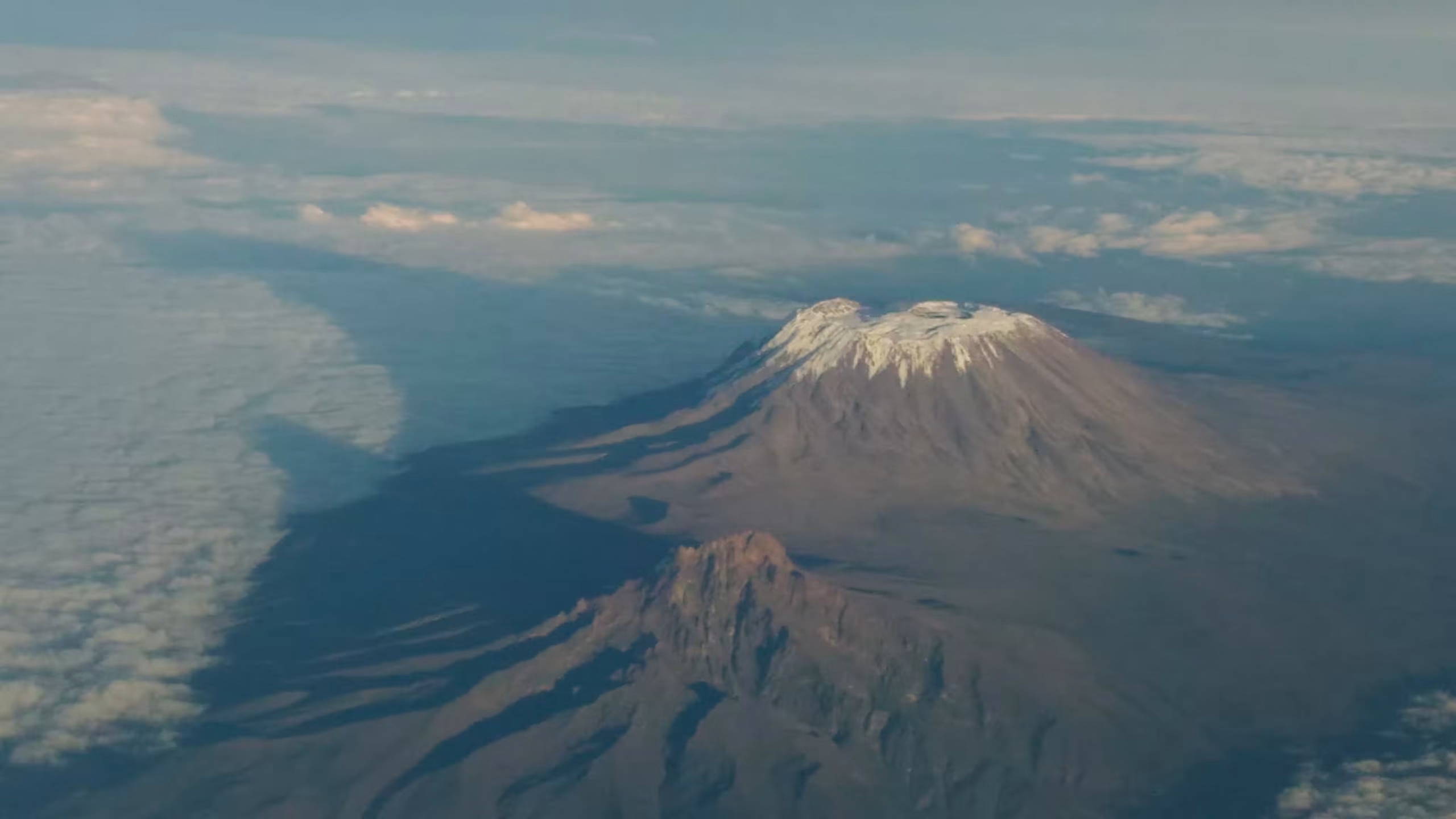
Between now and departure, we send a tailored packing list, visa reminders, and any final documentation, most of it covered in more depth in our pre-departure guide. On the day itself, a GAPI Safaris driver meets you at Kilimanjaro International Airport with a name board, whatever time your flight lands.
Your first evening usually includes a short welcome briefing, either in Arusha or at your first camp, walking through the days ahead and answering any last questions before the safari properly begins the next morning.

Step 05 Life on the Road: How a Multi-Day Safari Actually Moves
A typical multi-park itinerary moves in stages, a few nights in one park, a transfer that often doubles as a game drive, then a few nights in the next. Your guide and vehicle usually stay with you for the entire trip, so there is continuity, they get to know your interests and pace rather than starting fresh at every camp.
Each camp handles check-in, meals, and logistics, so your only real job each day is showing up for the morning drive. Luggage moves with the vehicle, laundry is handled by most camps, and your guide keeps track of the schedule so you do not have to think about the mechanics of the trip at all.

Step 06 Vehicles, Guides & How They Work Together
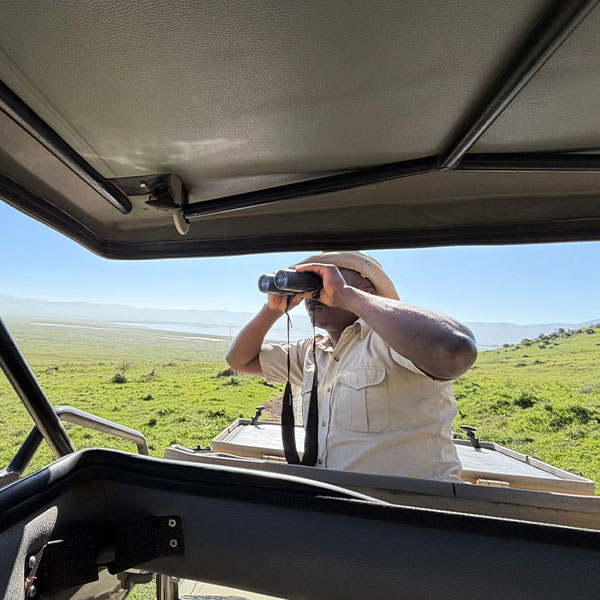
Private itineraries use a 4x4 with a pop-up roof, giving everyone in the vehicle a clear view for photos without leaving the vehicle, which park regulations require for safety. Guides stay in radio contact with each other across a park, which is how a sighting in one area often reaches other vehicles within minutes.
This network is part of why private guiding tends to find more than people expect, it is not just one person's knowledge of the park, it is a shared picture built by dozens of guides moving through the same landscape at the same time.
Step 07 Heading Home
Most itineraries build in a final morning game drive before the transfer back to the airport, timed around your departure flight rather than rushed. Your driver handles the drop-off, and you are through check-in with plenty of time before boarding.
A few days after you get home, we usually follow up to hear how the trip went, partly because we genuinely want to know, and partly because it shapes how we plan trips for the next guest. If you are already thinking about coming back, that conversation often starts right there too.
Step 08 Questions We Get Asked Every Day
Ready to Start the Process?
Send us your dates and we'll walk you through every one of these steps, starting with a first itinerary draft built specifically around you.
Prefer to talk first? Reach us at info@gapiafricasafaris.com or WhatsApp. Our team is based in Arusha and usually replies the same day.
Get the best of Tanzania in your inbox
Migration timing, packing guides, honest camp reviews, and stories from the field.